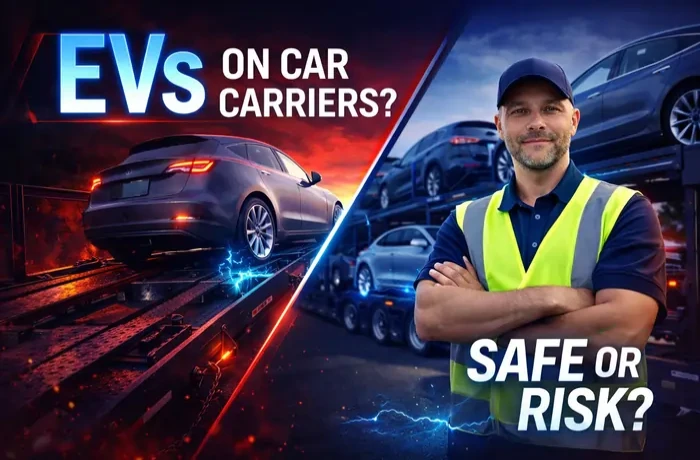



No, not all car carriers are specifically trained to haul electric vehicles (EVs). A simple "load it like a sedan" mindset can cause damage, delays, or a safety issue, as EVs present unique challenges for transport.
Training in auto transport usually starts with vehicle hauling fundamentals. EV knowledge builds on that foundation. Special EV training is not always required by a single universal credential across the industry. Competence shows up in process, not in buzzwords.
Core Training Car Carriers Need Before EVs
Safe car hauling is not only about driving a truck. Loading and securement create most of the risk. Foundational training and experience usually center on a few areas that determine damage rates and roadside safety.
CDL, Safety Compliance, and Inspection Habits
Most professional auto haulers operate under commercial regulations that require a Commercial Driver’s License in many cases. Compliance also includes vehicle inspection habits, safe operation standards, and awareness of weight limits. Those topics sound basic, yet many real-world issues come from rushed inspection steps, uneven surfaces at pickup, or poor judgment in tight neighborhoods.
Loading Discipline and Ramp Control
Ramp angle and approach matter for every vehicle. EVs can raise the stakes because underbody contact can involve battery shielding and sensitive components. A trained hauler plans angles, watches clearance, and avoids improvisation when a driveway slope turns loading into a scrape risk.
Vehicle Securement and Tie-Down Technique
Proper securement includes knowing where straps go, how tension is applied, and how to avoid stress on components that are not designed to take a load. EVs still rely on correct tie-down points. EV weight can increase consequences if the securement is sloppy.
Trailer Load Planning and Weight Distribution
Weight distribution keeps the trailer stable and helps avoid axle overload. EVs often run heavier than comparable gas models, and battery weight sits low and centralized. A trained carrier balances that weight across the trailer, rather than squeezing an EV into a spot that “usually works.”
Do Car Carriers Need EV Training?
Many carriers can transport EVs safely without a separate EV badge. EV-specific training becomes valuable when it closes gaps that standard hauling habits do not fully cover. A good EV-ready carrier understands how EV systems change towing and loading behavior, and knows when to stop and escalate.
EV training is most useful in these situations:
Winching and loading when the vehicle needs a specific mode
Managing wheel spin risk on driven wheels during towing or winching
Handling heavier vehicles in tight loading spaces
Recognizing warning signs of battery compromise and responding correctly
Some carriers gain this knowledge through formal programs. Others learn through repeated EV loads and strict internal procedures. Either path can work. Process still matters more than labels.
EV-Specific Training Topics That Affect Real Shipping Outcomes
Transport Mode, Tow Mode, and Wheel Spin Control
Many EVs require a transport mode or tow mode to prevent drivetrain problems during loading. Regenerative systems and electronic braking behavior can complicate towing if the wrong setting is used. An EV-ready driver asks about your model, confirms the correct mode, and avoids letting driven wheels spin during loading.
Owners often assume the driver will “figure it out.” Better results come from confirming your model’s requirements and making sure the driver expects to follow them.
Battery Pack Awareness and Underbody Risk
EV battery packs change the risk profile of a scrape. Underbody contact that might be cosmetic on a gas car can become a bigger concern on an EV. EV-aware carriers pay close attention to clearance, approach angles, and tie-down placement.
State of Charge Planning
Battery charge level affects pickup and delivery practicality. Low charge can create problems during loading, unloading, and basic movement at delivery. High charge is not a goal during transport. Many EV owners aim for a practical middle range so the vehicle can be moved without stress after arrival.
Charging during transit is not part of standard vehicle transport. Planning should assume the car arrives with roughly the charge it had at pickup, minus small losses that can happen during handling and temperature swings.
Thermal Event Awareness and Defensive Response
Thermal runaway is rare, but the consequences are serious. Training in this area focuses on recognition and defensive response, not heroics. Warning signals can include unusual vapor, hissing or popping sounds, strong chemical odor, smoke, or localized heat. A responsible carrier treats those signs as a stop condition and escalates immediately.
Battery compromise risk rises after collisions, severe underbody impacts, flood exposure, or known defects. A carrier who asks about prior damage and current warning lights is often showing better judgment than one who never raises the topic.
Questions That Confirm EV Handling Experience
A single “EV-certified” claim rarely tells you what you need to know. Process questions reveal competence quickly.
Questions to Ask Before Dispatch
“How do you confirm transport mode or tow mode for my EV model before winching?”
Clear answers sound specific. Vague answers sound like guesswork.
“What steps prevent wheel spin during loading?”
EV-ready carriers explain how they avoid spinning driven wheels when the manufacturer prohibits it.
“Where do straps go on an EV like mine?”
Good answers reference designated points and careful placement. Confidence without detail is not useful.
“What state of charge do you prefer at pickup?”
A practical range helps avoid delivery headaches.
“What would make you refuse the pickup?”
Serious answers mention signs of battery compromise, severe underbody damage near the pack area, smoke, odor, or urgent warnings.
Open Vs Enclosed EV Transport
Open and enclosed are the standard transport options available for EV shipping. EV shipments do not use hybrid-equipped carriers.
Enclosed transport reduces exposure to weather and road debris. Enclosed transport does not automatically mean better driver training. Skill still shows up in loading habits, securement, and decision-making when something looks off.
Open transport works well for many EV shipments. Enclosed transport can make sense when exterior condition protection is a top priority, or when the EV’s value makes cosmetic risk feel unacceptable.
Door-to-Door Service (Location Permitting) can be requested with either trailer type. Location constraints can affect how close a truck can get to a specific address.
Route, timing, and vehicle type shape pricing, so the AmeriFreight Auto Transport car shipping cost calculator helps you estimate EV transport cost before you commit to a pickup window.
Cold Weather EV Shipping and Battery Concerns
Cold weather changes EV behavior in ways that can surprise first-time owners. Range can drop. Charging can slow until the battery warms. A vehicle delivered cold-soaked may display less range than expected, even when the state of charge is reasonable.
Long-term battery harm from a single cold-weather transport trip is not the typical issue owners face. Practical issues show up more often.
An electric vehicle may arrive with lower displayed range, especially in colder conditions. That does not automatically signal damage. Charging soon after delivery is reasonable. You may also notice slower charging speeds at first, since lithium-ion batteries limit charge rates until the battery warms and reaches normal operating temperature.
A simple plan reduces stress. Keep enough charge for loading and unloading. Make sure the vehicle can be accessed at delivery. Expect winter behavior differences.
The EV Shipping Mistake That Creates Most Delivery Problems
Most headaches come from low charge plus access trouble. Phone-as-key setups can fail if a phone is not present at delivery. Some vehicles become difficult to move if the battery is too low. A dead EV cannot be treated like a gas car with a quick jump-start assumption.
A smoother handoff starts with basics. Have a clear key handoff plan for pickup and delivery so there is no confusion at either end. You should make sure the vehicle has enough charge to be safely loaded and unloaded. If your model requires a specific transport mode or battery setting, share those instructions before the carrier arrives.
Real-time GPS tracking is not offered, so expectations should match how carrier communication works during transit.
Disclaimer
Information here is general and meant for planning. Carrier procedures vary by route, equipment, and vehicle condition. Manufacturer guidance for transport mode and towing should be followed for each specific model. AmeriFreight Auto Transport does not offer insurance. AFTA plans are optional gap protection plans, not insurance, and AFTA coverage recipients have 48 hours to report damages. DOT rules do not permit personal items to be shipped in vehicles, and exceptions require carrier approval before dispatch.