

Auto Transport vs Towing
The movement of vehicles across the United States involves millions of cars and tens of billions of dollars annually. Yet, people routinely try to hire a local tow truck to move a car 500 miles. They assume a tow truck is the default mechanism for relocating a vehicle. The reality is that the vehicle logistics ecosystem is strictly divided into two distinct industries. Auto transport and towing operate under entirely different economic models and regulatory frameworks.
The Economics of Immediate Readiness Versus Scheduled Scale
Towing is an emergency service built on proximity and immediate readiness. When a tow truck arrives at a breakdown, the customer is paying for the exclusive use of that specific piece of equipment and the driver's immediate time. This creates a high per-mile cost. A standard tow involves a base hookup fee that typically runs between $75 and $125 according to industry data, followed by a per-mile charge that generally ranges from $2.50 to $7.00. This pricing structure makes a 100-mile trip prohibitively expensive. Towing is the only viable option for a car stuck in a ditch or blocking an intersection. It is not a financial reality for planned relocation.
Auto transport relies on economies of scale. Companies consolidate multiple vehicles onto specialized carriers to drive down the cost per mile across long distances. Industry analysis indicates a cross-country route exceeding 2,000 miles can drop to as low as $0.40 to $0.70 per mile, while a local tow remains priced for urgency. You trade the immediate response of a tow truck for a scheduled, methodical transit process.
The Mechanical Divide Between Scene Securement and Transit
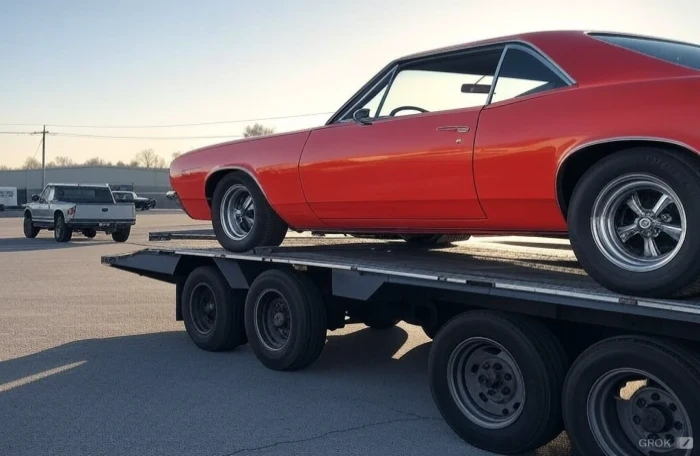
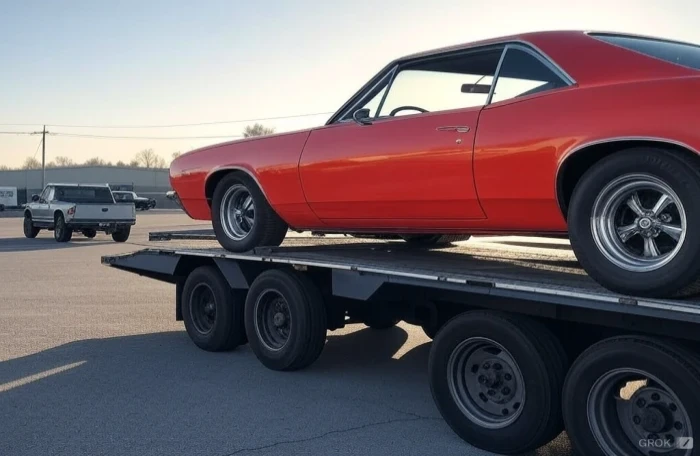
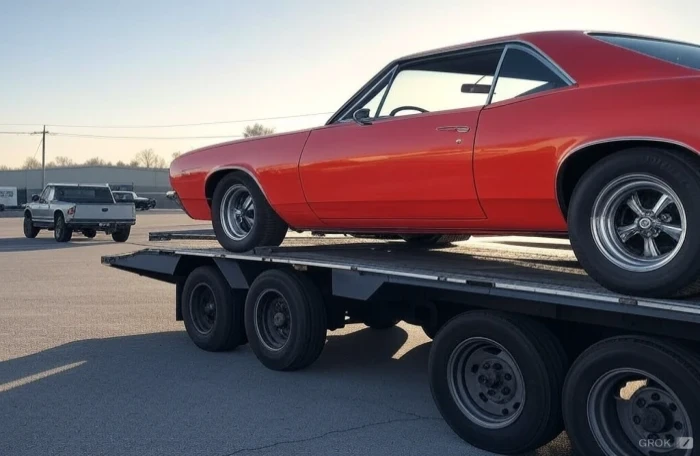
The equipment used by these two industries dictates what they can safely move. Towing companies utilize wheel-lifts for tight urban environments and flatbeds to winch disabled, heavily damaged vehicles off the roadway. Their primary goal is scene securement and getting a broken car out of traffic.
Auto transport focuses on stability and volume. Carriers use open multi-car trailers that can hold seven to ten vehicles at a time, or enclosed trailers that shield luxury and classic cars from the weather. These trailers are designed for functional vehicles to be loaded and secured for days at a time.
Operational Timelines and the Broker-Carrier Dynamic
The process of securing these services highlights their distinct purposes. You call a tow truck when you are stranded and need immediate, exclusive assistance. You book auto transport when you are planning a move. Auto transport involves building a route and matching a car with the right carrier. Weather, traffic, and Department of Transportation driving limits dictate the schedule rather than an immediate consumer need.
Navigating the auto transport market requires understanding the extreme fragmentation of the industry. According to federal data, the Federal Motor Carrier Safety Administration oversees roughly 2.09 million registered motor carriers. The American Trucking Associations reports that 91.5 percent of these carriers operate 10 or fewer trucks. This high fragmentation requires auto transport brokers to arrange transportation because they typically do not own any trucks. Consumers often believe they are dealing directly with a transport company, only to find their vehicle being hauled by a subcontractor.
Misunderstanding this dynamic is a primary source of industry confusion. The FMCSA launched Operation: Protect Your Move in response to a significant uptick in consumer complaints regarding household goods and auto transport, largely driven by damaged items and deceptive billing practices from unscrupulous operators. Protecting a vehicle requires confirming the carrier maintains adequate insurance. Federal regulations mandate a minimum of $750,000 in public liability coverage for auto haulers.
Choosing the right logistical path comes down to the condition of the car and the length of the journey. A broken axle five miles from home requires a tow truck. Relocating a functioning sedan to another state requires a multi-car carrier. Recognizing that the $12.8 billion towing sector tracked by industry analysts and the $39.4 billion automotive logistics market valued by Grand View Research serve completely different needs protects consumers from unrealistic estimates and logistical failures. Understanding this distinction saves time and prevents catastrophic billing surprises.