

The United States is built around distance. With nearly 6.6 million kilometers (about 4.1 million miles) of roadway, it has the world's largest road network. That scale shapes behavior. By mid-2025, about 75 percent of Americans had access to their own car, while another 18 percent relied on a shared or company vehicle.
That level of dependence fuels a massive automotive market. The road vehicle and parts retail trade generates more than $1.59 trillion in revenue, supported by steady demand even amid supply disruptions.
This environment explains why cross-country vehicle shipping remains essential. People relocate, buy vehicles from distant markets, or avoid adding thousands of miles to their cars.
A checklist for transporting a car only works when it reflects that reality. Pricing shifts, carrier availability changes, and minor preparation mistakes can quickly lead to delays or added costs.

Choosing Between Open and Enclosed Changes Exposure
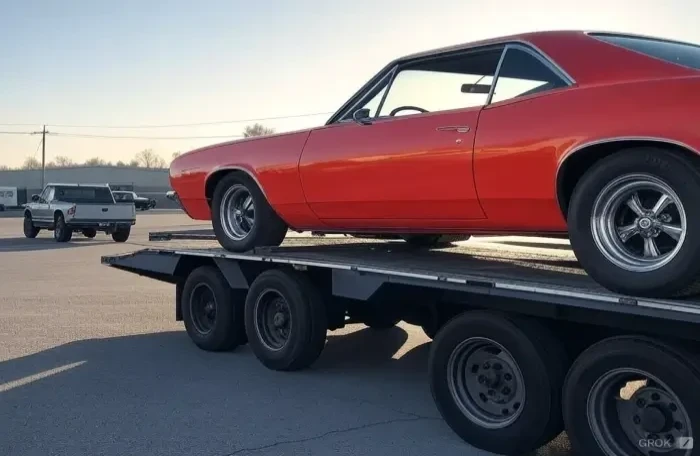
Open carrier transport is the standard for interstate car delivery. It is widely available and built for efficiency, which is why most vehicles are shipped this way.
Enclosed vehicle shipping addresses a different concern. It reduces exposure to road debris, weather, and environmental factors. That difference matters when the vehicle’s condition directly affects its value or repair costs. Enclosed transport usually costs 30 percent to 60 percent more than open transport. That increase is not about better handling. It reflects reduced exposure.

Broker vs. Carrier Is Not a Minor Detail
Carriers operate the trucks and physically move vehicles. Brokers coordinate shipments by connecting customers with available carriers.
This distinction becomes important when evaluating risk. The carrier’s performance determines how the shipment is handled. Top-tier carriers maintain damage rates below 0.5%, which reflects consistent operational standards rather than pricing alone.
At a minimum, verify FMCSA licensing and USDOT authority. These are required for interstate operations and confirm that the carrier meets federal standards.
Operating conditions have also changed. Running a truck costs about $2.270 per mile, and the industry faces a driver shortage of more than 100,000. These pressures influence both availability and pricing, even if they are not always visible in a quote.

Preparing the Car Is Where Most Problems Begin or End
Understanding how to prepare a car for long-distance shipping reduces the risk of delays and added fees.
The vehicle must be ready for safe loading and transport.
Tires should be fully inflated
The battery must be charged and secured
There should be no fluid leaks
The parking brake needs to function properly
Fuel level is not flexible. It must be at or below one-quarter tank to meet safety and weight standards. If the vehicle cannot move on its own, an inoperable vehicle surcharge typically applies. This reflects the additional effort required to load the vehicle.
Personal Items and Accessories Create Avoidable Risk
The Department of Transportation does not permit personal items to be transported inside vehicles. Carriers are not licensed to handle household goods, which is why this rule exists.
Some carriers may allow a limited number of items, but this must be arranged in advance and often involves an additional fee.
Loose belongings can shift during transit and cause interior damage. Toll transponders can be triggered while the vehicle is on the carrier, leading to unexpected charges. Exterior accessories, such as roof racks or spoilers, can create clearance or stability issues during loading.
The Bill of Lading Inspection Determines How Issues Are Handled
The Bill of Lading serves as the official vehicle condition report and the legal record of the shipment.
At pickup, every visible imperfection should be documented. This includes scratches, dents, and chips. Taking clear photos from multiple angles helps create a reliable record. At delivery, the inspection process should be repeated before signing the document. Any new damage must be noted at that time.
If the delivery is signed without documenting issues, it becomes difficult to pursue a claim later. That moment is where most disputes are either resolved or created. Newer tools can assist with inspections. AI-based systems can identify damage with 90 to 95 percent accuracy. Even so, personal documentation remains essential.

Timing Depends on Demand, Not Only Distance
Shipping timelines are influenced by demand patterns, not only mileage. Seasonal trends, such as snowbird car shipping routes and dates, create predictable surges in demand.
During peak periods, prices often rise on common routes. Carriers also adjust routes based on efficiency. Pickup and delivery operate within time windows rather than fixed schedules.
Location Quietly Drives Cost and Convenience
Door-to-Door Service (Location Permitting) is the most common approach for door-to-door car transport. It allows vehicles to be picked up and delivered as close as possible to the specified locations.
Access limitations still apply. Large transport trucks may not be able to enter narrow streets or restricted residential areas. In those cases, meeting in a nearby open location becomes necessary.
Shipping to or from less-accessible areas increases costs. Carriers must account for additional travel distance, which is reflected in the final price.
Insurance, Liability, and Industry Risk
Car shipping insurance requirements are shaped by regulation and the broader risk environment. Federal minimum coverage starts at $750,000, while some states impose higher requirements. New Jersey, for example, requires $1.5 million for certain trucks.
Liability costs have increased significantly. Large legal awards, often referred to as nuclear verdicts in trucking, now average more than $22.3 million. This has raised insurance costs across the industry.
Cargo theft has also become more common. Incidents increased by 57 percent in 2023, with average losses per shipment reaching $280,000. These risks influence how carriers operate and why verification and documentation matter more than ever.
A Checklist That Protects Your Time, Cost, and Expectations
A practical checklist for transporting a car focuses on decisions that directly affect outcomes.
Verify FMCSA licensing and USDOT authority
Understand broker vs. carrier roles
Choose between open carrier transport and enclosed vehicle shipping based on risk
Prepare the vehicle to meet safety and loading standards
Keep fuel at one-quarter tank or less
Remove personal items and unsecured accessories
Complete a thorough inspection at pickup and delivery
Plan around timing windows rather than exact dates
Consider how route demand and location affect pricing
Each step influences cost, timing, or risk. When one is overlooked, the impact usually appears later as a delay, an added fee, or a dispute. Most issues in cross-country vehicle shipping are predictable. The checklist works when it reflects that reality.
Where AmeriFreight Auto Transport Fits In
AmeriFreight Auto Transport operates as a broker, connecting customers with vetted carriers and coordinating the shipping process. This approach provides access to a broader carrier network rather than relying on a single fleet. It allows for more flexibility when matching shipments with available trucks.
Payment timing reflects this structure. No upfront payment until you choose a carrier. This allows customers to review their options before making a commitment. The company is recognized as one of the best reviewed in the industry. Consistency in carrier selection and communication tends to be what customers value most.


.webp)
.webp)