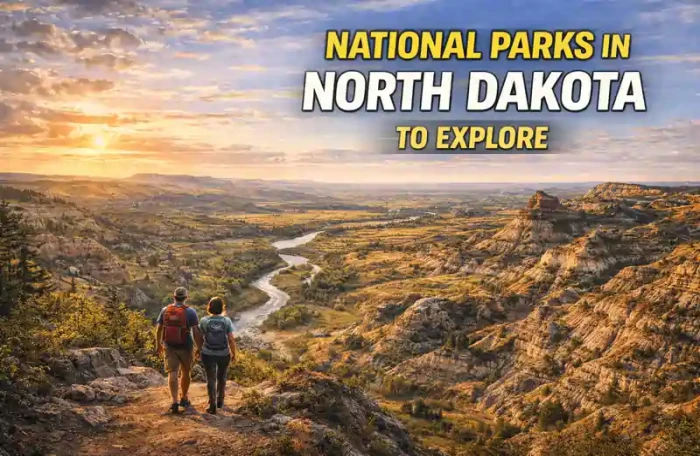

U.S. national parks pulled in about 331.9 million visits in 2024, the highest total in years. Many parks now feel packed during peak months. North Dakota offers a different kind of national park trip. You can still find wide-open overlooks, quiet trails, and the kind of wildlife watching that feels personal instead of rushed.
This guide shows you where to go, what to see, and how to plan smart so you get the best views without fighting crowds. Skip the planning, and it is easy to miss the top stops or arrive when weather and road limits cut your day short.
Sneak Peek
All the must-know basics about Theodore Roosevelt National Park, including its landscapes, wildlife, best viewpoints, and how to experience both the North and South Units in a smart, low-stress way
The other National Park Service–managed sites in North Dakota, what to see at each one, and the kinds of experiences they offer, like historic landmarks, Indigenous history, frontier trade sites, and scenic add-ons that pair well with a Badlands trip
Simple planning tips and key rules (roads, weather, wildlife safety, hiking, and respecting protected land) so your visit feels easy, safe, and well-organized
Overview
North Dakota offers a unique, less-crowded national park experience focused mainly on the Badlands, and the best way to plan your visit depends on whether you seek easy logistics or true solitude in the wilderness.
Here's a more detailed breakdown:
Theodore Roosevelt National Park: South Unit
This is the park’s main and most accessible hub, offering the 48-mile Scenic Drive, the most services, and reliable wildlife viewing for first-time visitors.
Theodore Roosevelt National Park: North Unit
This unit is more remote and noticeably quieter, featuring a more rugged landscape ideal for visitors who prioritize solitude and longer, backcountry-style hiking routes.
Theodore Roosevelt National Park: Elkhorn Ranch Unit
This is the most isolated unit, which has no facilities or scenic drive, and its value is primarily historical, marking the remote site of Theodore Roosevelt’s former ranch.
Other National Park Service Sites
Smaller sites like Knife River Indian Villages National Historic Site and Fort Union Trading Post National Historic Site add cultural and frontier history to a trip by focusing on Indigenous life and the fur trade.
Other Notable Considerations
Best Times to Visit: For comfortable hiking and fewer crowds, late spring through early fall (especially May, September, and early October) is the recommended window.
Park Rules and Logistics: It is essential to check road conditions for seasonal closures, maintain distance from wildlife like bison, and obtain a free permit if you plan to camp overnight in the backcountry.
The Roots of North Dakota’s National Park Story
Theodore Roosevelt National Park is North Dakota’s only full national park, and it protects the Badlands landscape that shaped Theodore Roosevelt’s life. He first came to this region in 1883, then returned to ranch along the Little Missouri River, including at his Elkhorn Ranch site. Those years helped form the conservation outlook he later carried into his presidency.
To preserve that legacy, Congress created Theodore Roosevelt National Memorial Park in 1947, and it became a full national park in 1978. Today, the park is split into three distinct units: South, North, and Elkhorn Ranch, each offering a different way to experience the Badlands.
About Theodore Roosevelt National Park
Theodore Roosevelt National Park is split into three separate units that you visit by driving between them on public roads. There are no internal park roads linking the units, so your route depends on which one you choose first. The South Unit and North Unit are about 68 miles apart, while the Elkhorn Ranch Unit sits between them on remote gravel approaches.
South Unit (near Medora)
This is the park’s main hub and the easiest unit to visit. It sits right off I-94 beside Medora, has the largest visitor center, and offers the widest mix of short hikes, overlooks, and wildlife pull-offs. It is also the most visited unit, though it still feels calmer than many U.S. national parks.
Location and access
Right off I-94 beside Medora.
Main visitor services and most trailheads are here.
Overall feel
Most approachable for first-timers and families.
Best for variety in one compact day.
Scenic driving
Home to the 48-mile Scenic Drive.
The NPS recommends at least two hours with stops.
Some stretches may operate as out-and-back during ongoing repairs, so check alerts first.
Top scenery and short hikes
Multiple overlooks and trailheads branch directly off the drive.
Short ridge walks like Wind Canyon deliver big views fast.
Painted Canyon is one of the strongest wide-angle overlooks in this unit.
Wildlife
Bison sightings are common near the road.
Prairie dog towns are easy to spot from pull-offs.
Wild horses often appear in open flats and rolling breaks.
North Unit (near Watford City)
This unit is smaller, more remote, and noticeably quieter. It sits south of Watford City on Highway 85 and feels more rugged, with steeper Badlands walls and broader prairie transitions. It is the best choice for visitors who want solitude and longer hikes.
Location and access
About 14 miles south of Watford City on Highway 85.
Fewer services and fewer visitors because of the drive.
Overall feel
Wilder and less developed than the South Unit.
Trails and overlooks often feel like true backcountry.
Scenic driving
A 14-mile out-and-back scenic road, 28 miles round trip.
Major stops include River Bend Overlook and Oxbow Overlook.
The NPS suggests about 1 hour and 15 minutes with stops.
Hiking experience
Caprock Coulee Trail offers a prairie-to-Badlands route with strong scenery.
Achenbach Trail to Sperati Point is a top pick for big views and fewer people.
Wildlife
Bison herds often graze along the drive.
Mule deer and elk show up most at dawn and dusk.
Quiet roads make sightings feel less rushed.
Elkhorn Ranch Unit
Elkhorn Ranch is the most isolated and least developed part of the park. It has no visitor center, no scenic drive, and no facilities. The value here is historical and emotional rather than sightseeing volume. Roads are gravel and can be rough after rain.
Location and access
Remote unit between the South and North Units.
The NPS estimates about 90 minutes each way to reach it.
High clearance or 4WD may be needed if roads are wet or icy.
Overall feel
Quiet, undeveloped, and reflective.
No services once you arrive.
What to see
Short walk from the parking to the cabin site.
Foundation stones and interpretive signs mark Roosevelt’s ranch home.
Experience
Best for travelers who want Roosevelt history and true silence.
Not ideal if your goal is lots of overlooks or multiple hikes in a day.
North Unit vs. South Unit If You Only Have One Day
The two main units are over an hour apart by car, so the National Park Service recommends focusing on one unit for a single-day visit rather than rushing both.
Bottom line: for most one-day trips, the South Unit is the smoother choice. If your priority is solitude and you do not mind the drive, the North Unit is a strong alternative.
Maah Daah Hey Trail And Backcountry Permits Near The Park
The Maah Daah Hey Trail is the state’s signature long-distance route through the Badlands. It runs about 144 miles across western North Dakota and overlaps with Theodore Roosevelt National Park in a few key stretches, which makes it a natural add-on for hikers, backpackers, and riders who want more time in the landscape.
Here’s what you need to know before planning an overnight or multi-day trip:
Trail basics
The full Maah Daah Hey Trail is roughly 144 miles, point-to-point through mixed terrain of prairie breaks and Badlands.
The trail crosses land managed by several groups, including the National Park Service and the U.S. Forest Service, so rules can change by segment.
Where it connects with Theodore Roosevelt National Park
A notable section passes through the South Unit, and other nearby segments link to park boundaries, letting visitors extend a park trip into a longer hike.
Backcountry camping permits inside the park
Any overnight camping outside developed campgrounds within Theodore Roosevelt National Park requires a free backcountry camping permit.
Permits for the South Unit and Elkhorn Ranch Unit are issued at the South Unit Visitor Center in Medora. Permits are not issued at Painted Canyon.
Permits for the North Unit are issued at the North Unit Visitor Center.
There are no established backcountry campsites in the park, so camping is dispersed, and visitors must follow park distance and Leave No Trace rules.
What changes once you leave NPS land
When the trail moves onto Forest Service or other non-NPS land, the backcountry permit requirement no longer applies, but local land rules still do.
This is why checking the official Maah Daah Hey Trail map and current guidance before a multi-day trip matters.
Other National Park Service Sites Worth Adding To Your Route
Theodore Roosevelt National Park is the only full national park in the state, but North Dakota also has a few smaller National Park Service sites that add history and culture to a road trip. These stops are easy to pair with a Badlands route because they sit along major highways and do not require a full extra day.
Knife River Indian Villages National Historic Site
This site preserves the remains of Hidatsa earthlodge villages along the Missouri River. It is one of the best places in the state to understand Indigenous life, trade, and community on the Northern Plains before and during early U.S. expansion.
What to see
Village depressions and earthlodge outlines along the interpretive trails.
The visitor center exhibits explaining Hidatsa, Mandan, and Arikara history, daily life, and river trade networks.
What the experience feels like
Easy, flat walking trails with strong historical context.
A quiet cultural stop that balances the nature-heavy park day with human history.
Seasonal ranger or cultural programs, when available.
Fort Union Trading Post National Historic Site
Fort Union was the most important fur trade post on the Upper Missouri River from 1828 to 1867. It was a key meeting and trading point for Northern Plains tribes and international traders, making it a strong historic counterpart to the park’s natural story.
What to see
Reconstructed fort buildings such as the Trade House and Bourgeois House.
Missouri River setting and grounds that show the fort’s original scale.
What the experience feels like
Walk-through exploration that works for all ages.
Living history demonstrations and ranger talks in peak season.
A good add-on for travelers already near the North Unit or Williston area.
Official site page for planning
Fort Union Trading Post National Historic Site (NPS).
National Trails And Smaller NPS Connections
North Dakota also includes National Park Service trail designations that act as light add-ons between major stops. These are not full destination parks, but they are useful for travelers who want more history or a short walk without changing the trip structure.
River corridor pull-offs and interpretive stops tied to the 1804–1806 expedition.
North Country National Scenic Trail western terminus
A national-scale hiking link for long-distance trail fans passing through the state.
Tips And Rules For A Smooth North Dakota Park Trip
A little planning goes a long way here. Roads, weather, and wildlife are the three things that most often shape a visit to Theodore Roosevelt National Park. The notes below keep your day realistic and help you avoid the most common mistakes.
Best Times To Visit For Quiet Trails
Late spring through early fall is the most comfortable window for hiking and scenic driving. May, September, and early October often bring mild temperatures and fewer visitors. If you want the calmest experience, aim for early morning or the last two hours before sunset.
Weather Reality In The Badlands
This landscape changes fast. Summer heat, strong winds, and quick storms are common. In colder months, snow and ice can appear suddenly and linger in shaded areas. Pack layers, a windbreaker, and more water than you think you need, even for short walks.
Road Conditions And Seasonal Closures
Both scenic drives can close when snow, ice, heavy rain, or road repairs make travel unsafe. Closures do not follow a fixed schedule, so checking the park’s alerts page before you enter is important. If a road is closed, you may still be able to reach the closest overlooks or trailheads near the entrance.
Wildlife Safety Rules
Bison, wild horses, elk, and deer may look calm, but they can move fast when stressed. Give them plenty of space and never approach for photos. The safest way to watch wildlife is from inside your vehicle or from a distant pull-off.
Hiking And Trail Etiquette
Many trails are unfenced and can be steep. Badlands clay gets slick after rain, so sturdy shoes matter. Stay on established paths when possible, and pack out all trash to protect fragile terrain and animal habitat.
Camping Rules
Cottonwood Campground serves the South Unit, and Juniper Campground serves the North Unit. Availability varies by season, so check the official campground pages for current status and any reservation details.
If you camp overnight outside developed campgrounds inside park boundaries, you need a free backcountry permit from a visitor center. The park has no marked backcountry sites, so camping is dispersed, and you must follow distance and Leave No Trace rules.
Pets And Simple Logistics
Pets must stay on a leash and are only allowed in limited areas. They are not permitted on most backcountry trails, so confirm rules at the visitor center if you are traveling with a dog.
Entrance fees are charged per vehicle and are valid for seven days across all three units. Current prices and pass options are listed on the park’s official fees page.
Final Thoughts
Theodore Roosevelt National Park proves you do not need a long checklist of sites to have a true national park experience. With three distinct units, the park lets you choose your own pace, whether you want an easy scenic day, a quieter, rugged hike, or a remote stop rooted in Roosevelt’s story.
The park’s official unit pages and alerts are the best way to keep plans realistic, since roads and programs can shift with weather and maintenance. If you add Knife River Indian Villages or Fort Union Trading Post, you round out the trip with culture and frontier history that connect naturally to the land around you. North Dakota’s National Park Service sites may be fewer than in other states, but they are tightly focused.
Make Your North Dakota Trip Easier With Car Shipping
If your North Dakota trip includes a move, a long-distance relocation, or buying a vehicle from another state, setting up transport early can make your travel plan easier. Once you map out Theodore Roosevelt National Park and the other National Park Service sites, it helps to know your vehicle will arrive on your schedule without adding a stressful drive to your route.
AmeriFreight Auto Transport works with experienced carriers experienced in open and enclosed shipping and from North Dakota. To see estimates, timing, and service details, visit their North Dakota car shipping page and request a quote.
Frequently Asked Questions (FAQs)
Is It Better To Visit The North Unit Or The South Unit Of Theodore Roosevelt National Park If I Only Have One Day?
The South Unit is usually better for one day because it has more highlights close together and a longer scenic drive that the NPS says takes about two hours with stops. The North Unit is a better fit if you want solitude and do not mind extra driving, and the NPS notes its scenic drive is shorter but still needs about 1 hour and 15 minutes with stops.
Are There Any Backcountry Camping Permits Available For The Maah Daah Hey Trail Section Near The Park?
Yes. The NPS requires a free backcountry camping permit for any overnight stay inside Theodore Roosevelt National Park boundaries, and permits are issued at the South or North Unit visitor centers.
Are There Specific Ranger-Led Programs Focused On Geology In The Badlands During The Off-Season?
Geology and Badlands-formation topics are part of the park’s interpretive programming, but scheduled ranger programs are seasonal and can be limited or absent in the off-season. Checking the park’s current events calendar is the only reliable way to confirm what is running during your visit.
Did Sacagawea Actually Live At The Awatixa Village Site Preserved By The National Park Service?
Yes. The NPS states that Sacagawea lived at Awatixa (also called Sakakawea Village) around 1804, and that Lewis and Clark met her there through Charbonneau.