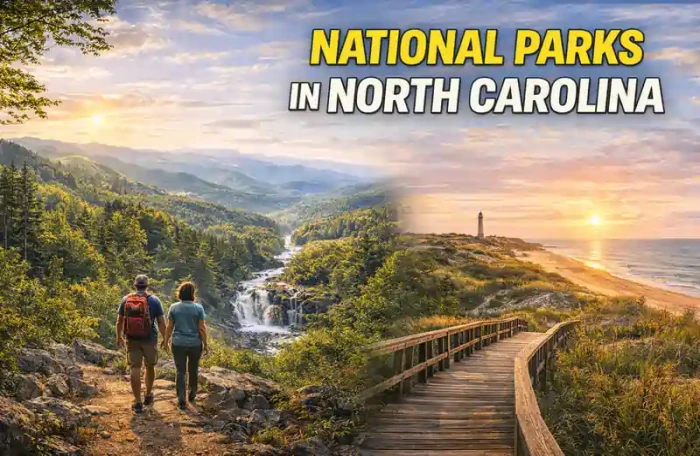

National parks in North Carolina take you from misty mountain ridges to open Atlantic beaches in one state. You can spend a morning in Great Smoky Mountains National Park, then plan a later stop on the Outer Banks, where the sea and sky feel endless.
North Carolina has one official national park, the Smokies, shared with Tennessee, and several other National Park Service sites that many travelers group under the same search. Great Smoky Mountains National Park is also the most visited park in the country, with about 13.3 million recreation visits in 2023, so knowing the basics ahead of time helps you avoid crowd stress and focus on the views.
Sneak Peek
What the national park in North Carolina is, a quick history of how it became protected, what the experience is like today, and the key facts first-time visitors should know
What other National Park Service sites exist across the state, and how they differ from an official national park
What visitors need to know before they go, including highlights and must-do experiences, wildlife to watch for, smart trip tips, and the best seasons to visit each site
Overview
North Carolina's national parks and National Park Service sites offer a diverse range of experiences, from the high peaks of the Appalachian mountains to the Atlantic barrier islands, and the best place to visit depends entirely on what you want to see and do.
Here's a more detailed breakdown:
Mountain Wilderness
Great Smoky Mountains National Park (NC Side): This is the state's only official national park, shared with Tennessee, known for ancient mountain backdrops, dense forests, and high-ridge scenic drives.
Oconaluftee Valley and Visitor Center: A great first stop for maps and easy walks along the river, featuring the Mountain Farm Museum and common elk sightings.
Newfound Gap Road scenic drive: One of the best drives for wide ridge views, popular for experiencing fall foliage without a hard hike.
Short, Moderate Hikes: Routes near the NC gateways that are typically under a couple of miles round trip and offer waterfall or forest payoffs.
Coastal National Seashores
Cape Hatteras and Cape Lookout: These National Park Service coastal sites on the Outer Banks protect beaches, dunes, and marsh habitats, offering a wide range of beach experiences.
Cape Hatteras National Seashore: More developed and easy to reach by bridge and highway, it is best for classic Outer Banks beach days and visiting the Cape Hatteras Lighthouse.
Cape Lookout National Seashore: Remote and quiet with access only by ferry or private boat, it is ideal for solitude, shelling, remote beach camping, and seeing wild horses on Shackleford Banks.
Historic and Scenic Sites
Other National Park Service Sites: These smaller areas across the state protect important scenery and history, often serving as excellent stops between the mountains and the coast.
Blue Ridge Parkway: A 469-mile scenic road with many overlooks and trailheads running through the Appalachian Highlands, perfect for a slow drive and sunset views.
Wright Brothers National Memorial: Honors the first powered flight in Kill Devil Hills with a visitor center and a walk up Kill Devil Hill.
Guilford Courthouse National Military Park: A key Revolutionary War battlefield near Greensboro with walking trails and story markers to follow the battle line.
Other Notable Considerations
Best Seasons for Travel: To avoid crowds, visit the coastal seashores in late spring and early fall; for the best leaf color, visit the Smokies in October, but expect heavy traffic.
Essential Logistics: In the Smokies, there is no entrance fee, but a parking tag is required for stops longer than 15 minutes, and it is best to start early for easier parking.
Wildlife and Safety: Be aware of black bears in the Smokies by keeping food sealed, and follow all posted signs on the coast to avoid seasonal closures for nesting shorebirds and sea turtles.
From Smoky Peaks To Atlantic Sands
North Carolina starts with one headline place: the Great Smoky Mountains National Park. Congress authorized the park in 1934 after years of land purchases and fundraising led by supporters in North Carolina and Tennessee, and it was formally dedicated in 1940.
Local communities, schoolchildren, and civic groups helped raise money to buy private lands, turning working mountain valleys into a protected public landscape. That shared effort is a big reason the Smokies still feel like a park built by the people who loved it first.
Once the Smokies were protected, the state’s park story kept stretching east. The National Park Service added coastal and historic sites that protect different parts of North Carolina’s identity, from high ridges to barrier islands.
So even though the Smokies are the only official national park here, you still get a full range of East Coast park experiences in one state. Next, we will look at the North Carolina side of Great Smoky Mountains National Park, what it is like today, and the best ways to enjoy it without tiring yourself out.
Great Smoky Mountains National Park On The North Carolina Side
Great Smoky Mountains National Park is the only official national park in North Carolina, and it sits right on the state line with Tennessee. The park stretches across both states, so you can enter from North Carolina near Cherokee or from Tennessee near Gatlinburg, then travel freely between sides once you are inside. The reason this land is protected is simple and lasting.
Leaders and local supporters wanted to save the Smokies’ old forests, mountain watersheds, and wildlife from heavy logging and unchecked development, which shaped the push to create the park in the early 1900s.
Today, the experience on the North Carolina side centers on deep green valleys, rushing rivers, and high ridge views you can reach by car. You will see signature Smokies landscapes like ancient mountain backdrops, dense hardwood forests, waterfall coves, and long scenic drives that climb into cooler air.
Best Core Experiences on the NC Side
Oconaluftee Valley and Visitor Center
A smart first stop for maps, trail updates, and road notices.
Flat, easy walks along the river and meadow edges.
Mountain Farm Museum, behind the visitor center, has historic cabins you can walk through on short paths.
Mingus Mill is close by and open to the public.
Elk often appear in the fields early and late in the day.
Newfound Gap Road scenic drive
One of the best drives for wide ridge views and pull-offs.
A top pick for fall color without a hard hike.
Higher elevations change first, with peak color often running from mid-October into early November in lower areas.
A few standout, moderate options
If you want a short hike, choose well-known routes near the NC gateways that stay under a couple of miles round trip. These give waterfall or forest payoffs without long climbs.
These pair well with the scenic drives and are classic things to do in Great Smoky Mountains when you want both views and a little trail time.
What Visitors Need to Know Before They Go
Entrance and costs
No entrance fee.
A parking tag is required if you park longer than 15 minutes anywhere inside the park. You can buy daily, weekly, or annual tags online or at visitor centers.
Crowds and parking
Summer and peak fall weekends are the busiest.
Arrive early to get parking at popular pull offs and trailheads.
Weather by season and elevation
Temperatures drop as you climb, even in warm months. Bring layers.
Roads near high gaps can see fog, wind, or winter ice faster than valley areas.
Quick Seasonal Overview
Fall: Best foliage season, busiest time, strong roadside color views.
Spring: Wildflower blooms and cooler hikes, rising crowds by late spring.
Summer: Full access to trails and waterfalls, high heat in valleys, heavy visitation.
Winter: Quiet roads and views, but some high routes close during snow or ice.
Cape Hatteras And Cape Lookout National Seashores
Both Cape Hatteras National Seashore and Cape Lookout National Seashore are National Park Service coastal sites on the Outer Banks. They protect beaches, dunes, and marsh habitats, not mountain wilderness.
That is why rules focus on shoreline safety, nesting wildlife, and protecting fragile dunes. What makes them feel different is access, crowd level, and the kind of day you can have there.
Cape Hatteras National Seashore
Main experiences
Wide ocean beaches plus calmer Pamlico Sound waters.
Lighthouse visits, short nature walks, and island towns close by.
Pet restrictions
Pets must stay on a leash no longer than 6 feet.
Pets cannot enter designated swim beaches, buildings, or wildlife closure areas.
Best time to go
Spring and early fall give warm days with fewer people than summer.
Cape Lookout National Seashore
Main experiences
Empty stretches of sand, dunes, and marsh edges with almost no development.
Wild horses on Shackleford Banks seen from a safe distance.
Remote beach camping for visitors who like simple, off-grid nights.
Spring birdwatching
Spring migration is one of the best times to visit.
Core Banks and Shackleford Banks are prime zones for shorebirds and other migrants.
Logistics
Ferry schedules control your day, and services on the islands are limited, so pack food, water, and sun cover.
More National Park Service Sites Across North Carolina
After the Smokies and the Outer Banks seashores, you still have several National Park Service places that round out a full trip across the state. These sites are smaller than a national park, but they protect some of North Carolina’s best scenery and history.
Many visitors pair them with hiking in North Carolina, splitting days or road trips between the mountains and the coast.
Scenic Corridors And Long Trails
A 469-mile scenic road that runs through the Appalachian Highlands, with many overlooks and trailheads on the North Carolina stretch
Great for a slow drive, short hikes, picnic stops, and sunset views
It links well with many things to do in Smoky Mountains if you want to extend your mountain time
A National Park Service partnership area focused on the mountains and foothills of western North Carolina
You visit for craft towns, music traditions, farm stops, and historic mountain communities tied to the landscape
Other trail-based NPS experiences
While not all long trails are managed as full parks, many tie into NPS lands and help you build a west-to-east route
Historic And Cultural Sites Worth A Stop
Wright Brothers National Memorial (Kill Devil Hills)
Honors the first powered flight, with a visitor center and a walk up Kill Devil Hill for a wide view of the Outer Banks
Fort Raleigh National Historic Site (Roanoke Island)
Focuses on early English settlement history and the story of the Lost Colony
Guilford Courthouse National Military Park (Greensboro)
A key Revolutionary War battlefield with walking trails and markers that help you follow the battle line
Moores Creek National Battlefield (near Wilmington)
Another Revolutionary War site with short trails and a small visitor center
Carl Sandburg Home National Historic Site (Flat Rock)
The poet’s home and farm, with easy walking paths, and a look into life in the Blue Ridge foothills
Plan Your Visit For The Best Season And The Least Stress
North Carolina’s parks and NPS sites feel different depending on the month you go, so match your season to your goal. In the Smokies, October brings the strongest leaf color, but also the heaviest traffic and full parking lots on popular roads. Spring is calmer early on, then gets busier as wildflowers peak, and schools head toward break.
Summer gives full trail and road access, yet heat and crowding rise fast in the valleys. Winter is the quiet season, but higher roads can close during snow or ice. On the coast, late spring and early fall often hit the sweet spot of warm days and fewer people than midsummer. Summer is peak beach time, but expect more traffic, hotter sand, and more nesting closures for wildlife.
Wildlife and Safety Basics
Smokies wildlife
Black bears live throughout the park, so keep food sealed and never approach or feed animals
Elk are common in Oconaluftee fields at dawn and dusk, and you should watch from a safe distance
Birdlife changes by elevation, so even short walks can turn up different species
Coastal wildlife
Shorebird nesting zones and sea turtle nesting areas are protected by seasonal closures, so follow posted signs on beaches and trails
Stay off the dunes outside marked paths because dune grass holds the islands in place during storms
Practical Tips that Prevent Common Trip Problems
Start early in the Smokies
Popular pull-offs and trailheads fill fast in summer and fall, so early arrivals get easier parking and quieter views
Check daily updates on the coast
Wind, surf, and wildlife closures can change beach access, so look at the seashore alerts before you drive out
Plan ferry timing for Cape Lookout
Ferries set your arrival and exit windows, and services on the islands are limited, so pack food, water, and sun cover
Know the basic rules before you park or walk
The Smokies do not charge an entrance fee, but you need a parking tag for stops longer than 15 minutes
Seashores allow pets on leash in most areas, but some beaches and trails close for nesting wildlife, and those closures apply to people and pets
Final Thoughts
National parks in North Carolina give you a full range of landscapes in one trip. Great Smoky Mountains National Park sets the tone with high ridges, old forests, and easy scenic drives. Then the coast flips the setting to wide beaches and barrier islands at Cape Hatteras and Cape Lookout.
Add the Blue Ridge Parkway and other NPS sites, and you get a route that feels like a long story across the state. The best way to plan is to pick your main goal first, then build around it. If you want fall color, start in the Smokies and use overlooks for big views with little effort. If you want spring birds and quiet beaches, lean toward Cape Lookout.
Get Your Car To North Carolina With AmeriFreight Auto Transport
If your Smokies to sea plan includes a long drive, a move, or a fly-in and explore trip, think about how your car fits into the picture. Some visitors want their vehicle waiting for them near the mountains or the coast, instead of adding extra miles before the first trail or beach day. Setting that up early can make your trip feel easier from day one.
AmeriFreight Auto Transport offers vehicle shipping to and within North Carolina. To see options, estimates, and how the process works, visit the AmeriFreight North Carolina Car Shipping page.
Frequently Asked Questions (FAQs)
Which national park in North Carolina is the best for viewing fall foliage without having to hike a strenuous trail?
Great Smoky Mountains National Park is the best choice, with top leaf views from Newfound Gap Road overlooks and Oconaluftee Valley pull-offs.
What are the pet restrictions for Cape Hatteras National Seashore in North Carolina, specifically regarding the beach and walking trails?
Pets may go on most beaches and walking trails on a leash up to 6 feet, but they are not allowed on designated swim beaches, inside buildings, or in wildlife closure areas.
Where can a visitor go birdwatching for migratory species in Cape Lookout National Seashore during the spring?
Core Banks and Shackleford Banks are prime spring migration zones with dunes, beach flats, and marsh edges that attract shorebirds and other migrants.
Are there any historic sites or cabins accessible to the public within the Oconaluftee area of the Great Smoky Mountains National Park?
Yes. The Mountain Farm Museum behind Oconaluftee Visitor Center has historic cabins on an easy walking loop, and Mingus Mill is nearby and open to visitors.