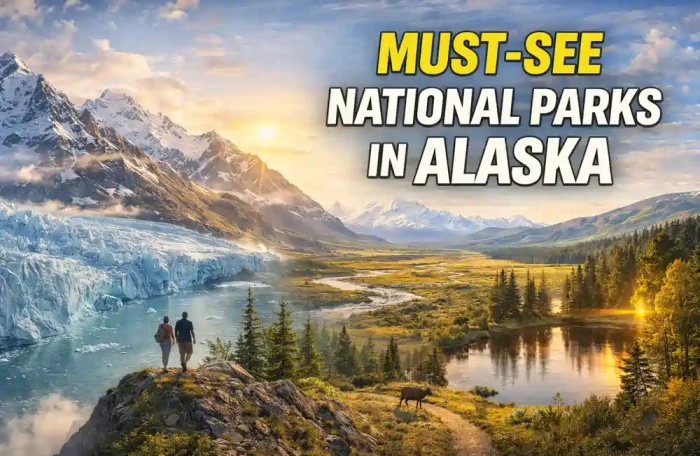


Explore the Wild: Must-See National Parks in Alaska

The wilderness of Alaska defies standard road trip planning. Visiting these protected lands is not like driving the paved loops of the lower forty-eight states. The National Park Service manages more than 54 million acres across the state. The eight designated national parks and their attached preserves account for roughly 42 million acres of that tundra, ice, and vertical relief. Wrangell-St. Elias alone is six times the size of Yellowstone. Visitors often expect heavy infrastructure and easy access, but the reality is that most of this terrain is shaped by active volcanism and retreating glaciers. Much of it remains completely inaccessible by car. You cannot simply rent a vehicle in Anchorage and drive to every park gate. The logistics require bush planes, water taxis, and a significant shift in how you budget your travel time.
Denali National Park and Preserve
Denali remains the most recognizable destination, but the physical environment is actively shifting. Thawing permafrost triggered the Pretty Rocks landslide, severing the 92-mile Denali Park Road at mile 43 until at least 2026.
A standard Denali tour requires serious adjustments. Travelers now rely heavily on air taxis to reach backcountry lodges rather than taking a traditional bus to the base of the mountain. You can still access the front country, but reaching the deep interior requires a much higher budget for aviation. Unlike other parks, Denali maintains a working sled dog kennel, relying on canine teams to patrol the wilderness during winter months when machinery fails.
Wrangell-St. Elias National Park and Preserve
At 13.2 million acres, Wrangell-St. Elias is the largest unit in the national park system. It holds nine of the sixteen highest peaks in the United States, including Mount St. Elias. The park also contains more than 3,100 glaciers, covering a third of its total landmass.
Most visitors enter via the unpaved McCarthy Road, which requires a sturdy vehicle and a slow pace. At the end of that road sits the Kennecott Mines National Historic Landmark. Exploring this abandoned town provides a rare look at early 20th-century industrial history frozen in a glacial landscape. Hiking out onto the Root Glacier requires crampons and a guide if you lack crevasse navigation experience.
Glacier Bay National Park and Preserve
This marine wilderness transitions rapidly from a massive ice sheet to a thriving fjord system. The bay is the ancestral homeland of the Huna Tlingit, who navigated these waters long before the ice retreated. More than 700,000 people visit annually, and roughly 90 percent of those guests simply watch tidewater glaciers calve from the deck of a cruise ship. This offers high visibility with low physical effort.
For independent travelers, getting to the park headquarters in Gustavus means booking a regional flight or the Alaska Marine Highway ferry. Once there, kayaking among the icebergs demands strict attention to tide charts and unpredictable weather systems.
Kenai Fjords National Park
Kenai Fjords is where the mountains drop directly into the sea. The park is defined by the 700-square-mile Harding Icefield. Reaching the edge of that ice requires a steep, rugged hike up the Harding Icefield Trail alongside Exit Glacier.
Many travelers assume summer guarantees clear views of these peaks. Coastal fog frequently grounds flights and hides the mountains for days. If the weather holds, a dedicated boat tour out of Seward is the most reliable way to spot humpback whales, sea otters, and puffins navigating the deep glacial waters.
Katmai National Park and Preserve
Katmai is famous for density and scale. Coastal brown bears gather at Brooks Falls each summer to gorge on sockeye salmon. These bears can reach nearly 1,500 pounds, easily dwarfing interior grizzlies. Reaching this spectacle requires securing a seat on a floatplane months in advance.
The park is also defined by violent geology. The 1912 eruption of Novarupta left behind the Valley of Ten Thousand Smokes. This barren ash landscape requires a rugged bus ride from Brooks Camp to explore.
Lake Clark National Park and Preserve
Lake Clark sits where the Alaska and Aleutian ranges converge. It protects coastal rainforests, tundra, and deep glacial lakes without a single road connecting to the outside world. Bear viewing here rivals Katmai but often occurs in more isolated coastal meadow settings.
You will need to charter a bush plane from Anchorage, Kenai, or Homer to access the lodges. The park is dominated by two active stratovolcanoes, Mount Redoubt and Mount Iliamna. Redoubt remains highly active and occasionally disrupts regional air travel with massive ash plumes. An eruption famously shut down all four engines of a commercial flight in 1989.
Gates of the Arctic National Park and Preserve
True isolation exists above the Arctic Circle. Gates of the Arctic contains no roads, no established trails, and no visitor facilities within its boundaries. It protects millions of acres of the central Brooks Range. The region is home to the Nunamiut people of Anaktuvuk Pass, the only village within the park, who continue to rely on the migrating caribou.
This environment is unforgiving. Exploring these northern extremes demands unguided backpacking experience, river crossing skills, and an acceptance of absolute wilderness. You must charter a flight from a gateway community like Bettles or Coldfoot to be dropped on a gravel bar or alpine lake.
Kobuk Valley National Park
Just west of Gates of the Arctic sits an unexpected geological anomaly. Kobuk Valley features 25 square miles of ancient sand dunes acting as a crossing point for the massive Western Arctic caribou migration. The nearby Onion Portage has served as a strategic hunting site for at least 8,000 years.
The Great Kobuk Sand Dunes are a relic of the Ice Age and represent the largest active, high-latitude dune field on Earth. The aviation logistics required to reach these dunes are incredibly expensive. This cost makes Kobuk Valley one of the least visited national parks in the country.
The Seasonal Tradeoff
Travelers often hold conflicting goals for an Alaskan trip. They want the midnight sun for endless hiking, but they also hope to see the aurora borealis. You have to choose one.
Summer delivers the daylight necessary for backcountry travel and wildlife viewing, but the skies are too bright for the northern lights. Summer also brings intense mosquito hatches that dictate how enjoyable a hike actually is. Winter offers the aurora, but park access drops to near zero for anyone without specialized snow expedition skills.
The Reality of the Last Frontier
The expectation of complete solitude is a common misconception. These parks are not empty museums. They are active environments where Alaska Natives and rural residents continue to rely on the land for survival.
They are also increasingly busy. More than three million people visit Alaska national park units annually. If you stay on the cruise ships or paved viewpoints, expect crowds. Reaching true isolation requires chartering flights and leaving established infrastructure behind.
A trip here forces an acceptance of scale. You cannot see all eight parks in a single vacation. Weather will cancel flights, and the wilderness dictates the schedule entirely. Success requires choosing one or two regions, investing in local aviation, and letting go of rigid itineraries.


.webp)