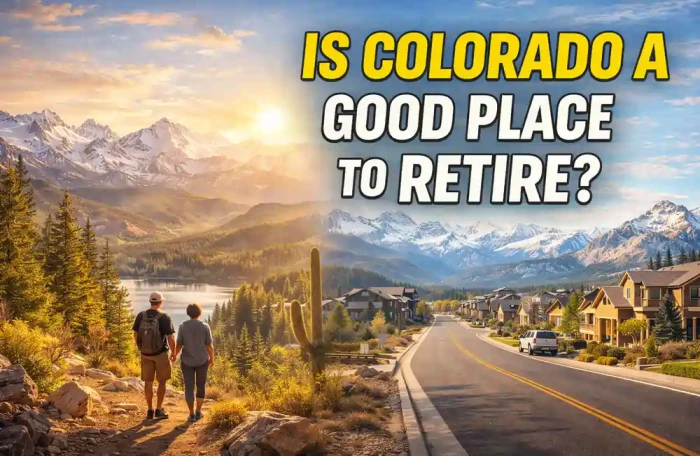


Yes, Colorado can be a good place to retire. Many people choose the state for clean air, mountain views, and active communities. Costs and altitude can bring real challenges, and some towns have higher crime or medical prices.
The goal is not picking the trendiest place. It is finding a town that fits your health needs, comfort level, and budget.
This guide helps you sort through the choices. It also gives you an in-depth background on why the Centennial State is one of the best places to retire in the U.S.
What You’ll Learn
The pros and cons of retiring in Colorado
The median home prices of affordable and expensive locations throughout the Centennial State
The frequently asked questions retirees ask about retiring in Colorado
Summary
Pros of Retiring in Colorado

Financial and Tax Benefits for Seniors
Spending your retirement in Colorado means experiencing financial benefits, such as low sales tax rates. In fact, the Centennial State’s rate is ranked the fifth lowest in the country.
The state’s property tax rates are also relatively low. Seniors may qualify for a property tax exemption that reduces taxes on the first portion of their home’s value.
These benefit you through:
More savings: This can help you build an emergency fund.
More finances for other goals: Having less money for taxes means more for other retirement costs, such as health, travel, or leisure.
Exceptional Health and Wellness Focus
Colorado remains one of the best places to retire in the country because of its robust health and wellness sector. Adults there have one of the lowest obesity rates in the U.S. Quality hospitals serve the state, making care more accessible if health needs arise.
The state also manages multiple programs that aim to keep its residents healthy:
Lifelong Colorado Initiative: It supports aging-in-place through nutrition services, support for seniors, and community-based care.
Healthy Eating & Active Living (HEAL): It encourages communities to improve access to nutritious food and foster walking, biking, or other active commuting.
Vibrant Outdoor Lifestyle and Culture
The Centennial provides ready access to hiking trails, forests, and lakes for gentle walks or stronger outings. In fact, Colorado has four national parks. Some, like the Black Canyon of the Gunnison National Park, contain fewer wild animals. This is because it features sheer cliffs and narrow canyon walls.
Other national parks, though, are places where you can see more Colorado wildlife. The Rocky Mountain National Park, for example, is famous for its elk, moose, bighorn sheep, and marmots.
Besides natural attractions, the state offers cultural hotspots. In some Denver parks alone, you can find places to understand culture, like:
Denver Botanic Gardens: Found in Cheeseman Park. Contains the Japanese garden Shofu-en, which means the “Garden of Wind and Pines.” It was designed by famed Japanese-American landscape architect Koichi Kawana.
Odell Brewing Sloan’s Lake Brewhouse: Found in Sloan’s Lake Park. Offers numerous experimental beer options to patrons and newcomers.
Pockets of Relative Affordability
If you’re looking to avoid Denver traffic and settle in some of the most affordable retirement communities in Colorado, there are some cities and towns that you can consider. Many of these have lower prices. One, Pueblo, has more than 50% cheaper housing compared to the rest of the state.
The table below shows the difference between prices in such locations compared to the Colorado median:
Source: 2025 Zillow data
Before picking your retirement spot, it may pay to:
Look for easy access to healthcare: Pick a place with good hospitals, clinics, and specialists nearby so you can get care when you need it.
Try visiting the place first: Rent temporarily before committing. That gives a real sense of what daily life would be like.
Cons of Retiring in Colorado

High Overall Cost of Living and Housing
The cost of living in Colorado is 2.66 percent higher than the rest of the country. And there are many reasons for this.
Coloradans pay more for certain cost factors. For example, housing. The median home price in the Centennial State is $535,778. This is almost 40 percent higher than the national median. Rent and groceries are also higher in Colorado.
Nevertheless, other cost factors in the Centennial State are lower than the rest of the country:
Electricity: Coloradans pay 30.17 percent less than those living in other states.
Healthcare: Coloradans pay 17.13 percent less than the rest of the country.
The table below shows how retiring in Colorado costs compared to the national average:
Some locations are especially more expensive than the rest of the state. This is in light of their housing costs. In fact, homes in towns like Aspen and Vail are more than 100 percent pricier than the rest of the state.
The table below shows the difference between prices in such locations compared to the Colorado median:
Source: 2025 Zillow data
Variable Healthcare Costs
You may pay significantly more when seeking medical services in certain towns, especially in Colorado's western and central mountain regions. In parts of the western slope, the price of routine care and outpatient treatments tends to run well above the state median.
This means it can be crucial to:
Plan ahead for out-of-pocket expenses and long-term care: Budget for premiums, copays, and uncovered services so you’re not caught off guard.
Evaluate health insurance plans carefully: Use Connect for Health Colorado to compare marketplace plans.
Elevated Crime Rates in Certain Cities
Some Colorado cities show notably higher crime rates. Pueblo, for example, can feel riskier than many other areas. Its violent-plus-property crime rate is well above the state norm.
Managing this may involve:
Checking crime data before you move: Pick a neighborhood or suburb with low violent and property-crime rates. Local police websites or public crime maps often help.
Choosing places with active community involvement: Neighborhood watch groups, senior-friendly programs, or social clubs help create safer, friendlier environments.
Final Thoughts: Retiring in Colorado
Relocating to Colorado can give you more good years than you expect. The state blends low taxes, strong senior health resources, and vast natural beauty in a way that supports both your wallet and your wellbeing. Clean air, access to the mountains, and active communities give you many ways to enjoy retirement outdoors or socially.
Even with higher costs in some areas in both housing and healthcare, the overall balance of nature and community can make Colorado a smart choice for your golden years.
Move Your Car to the Centennial State with AmeriFreight
Visiting Colorado feels easier when you have your own car. Driving lets you reach mountain towns, lakes, and trailheads that sit far from main roads. If you plan to move or stay for a longer visit, bringing your vehicle can help you travel on your own schedule and see more of the state’s open spaces with less hassle.
Let AmeriFreight Auto Transport handle your vehicle shipment before you settle into the Centennial State. Our agents work with licensed carriers across the country to help make your move smooth and dependable.
Frequently Asked Questions (FAQs)
Which Colorado towns offer a true ‘four-season’ climate without the extreme altitude of mountain ski resorts?
Consider places like Grand Junction Pueblo. Both lie at lower elevations, escape extreme mountain-town altitude, and still enjoy four distinct seasons with milder winters and warm summers.
What is the air quality like in the high-altitude towns during wildfire season, and how does it affect seniors with respiratory issues?
Air quality in high-altitude Colorado towns can worsen sharply during wildfire season. Smoke adds fine particles (PM2.5) and reduces air quality, often triggering alerts from the Colorado Department of Public Health and Environment.
That makes breathing harder for seniors or people with lung or heart issues. Coughs, shortness of breath, or asthma flare-ups may increase.
Is it still practical for a retiree to live an active hiking and skiing lifestyle in Colorado if they have knee or joint issues?
Yes, you can still enjoy hiking (and even light skiing) with knee or joint issues in Colorado, but you’ll need a careful approach. Walking, especially on flat or gentle trails, can help maintain joint mobility and build supportive muscle around the knee. Using proper gear and starting slow are other helpful tips.
What is the specific impact of Colorado’s high altitude on new retirees moving from sea level?
If you move from sea level to high-altitude Colorado, your body faces lower oxygen levels and thinner air. You may breathe faster, feel shortness of breath, fatigue, or dizziness until you adapt.
Disclaimer
The information provided in this guide is for general informational purposes only and does not constitute legal, financial, or professional advice. While efforts have been made to ensure the accuracy and timeliness of the content, laws, regulations, and local conditions are subject to change without notice.
Readers should not act upon this information without seeking appropriate professional counsel, especially in financial and legal matters.


.webp)