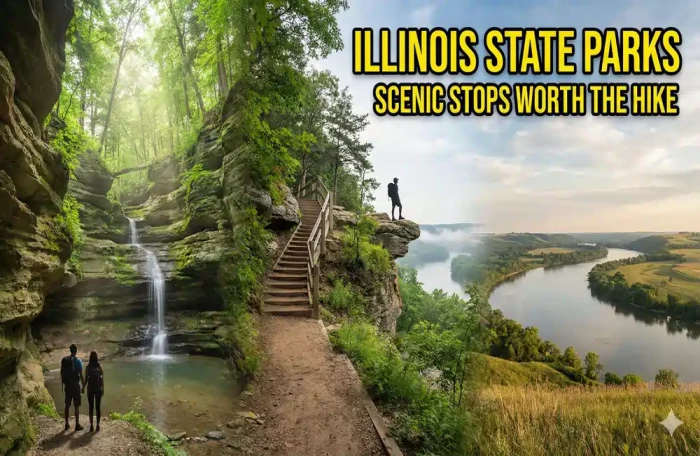


Illinois is home to hundreds of state parks, recreation areas, and historic sites managed by the Illinois Department of Natural Resources (IDNR), protecting more than 475,000 acres of forests, rivers, wetlands, prairies, and rock formations. Most parks offer free day-use admission, making them an affordable way to experience the state's natural landscapes, whether you're planning a weekend road trip or exploring after relocating to Illinois.
While Illinois is often associated with open farmland, its state parks tell a different story. You'll find towering sandstone canyons, scenic river bluffs, quiet forests, Lake Michigan beaches, and miles of hiking trails spread across the state. These five parks stand out for their scenery, recreation, and accessibility.

Starved Rock State Park
Starved Rock State Park is Illinois' most visited state park and one of the Midwest's premier hiking destinations. Located along the Illinois River in Oglesby, the park is known for its dramatic sandstone canyons, scenic overlooks, and seasonal waterfalls. The landscape was shaped thousands of years ago by glacial meltwater and erosion, creating 18 canyons connected by more than 13 miles of hiking trails.
Spring is the best time to see waterfalls flowing through French, Wildcat, and St. Louis Canyons after snowmelt or heavy rain. During autumn, the overlooks become popular spots for viewing colorful foliage along the Illinois River. Winter brings another reason to visit, with bald eagles gathering near the river as temperatures drop.
Giant City State Park
Giant City State Park offers a completely different side of Illinois. Located in the Shawnee Hills near Makanda, the park is famous for its towering sandstone walls that resemble narrow city streets, giving the park its distinctive name. These rock formations were created as large sandstone blocks gradually separated along natural fractures, leaving winding passageways that are now one of the state's most recognizable hiking experiences.
The one-mile Giant City Nature Trail is the park's signature hike, leading visitors through the sandstone corridors and past unique rock formations. Those looking for longer adventures can explore the Trillium Trail or the 12-mile Red Cedar Trail, which passes through forests, ravines, and seasonal wildflower displays.
Beyond hiking, Giant City is known for its biodiversity. The park protects hundreds of native plant species and provides habitat for deer, wild turkey, and numerous bird species. History also plays a role here, with the Civilian Conservation Corps constructing many of the park's stone buildings during the 1930s, including the historic Giant City Lodge that still welcomes visitors today.
Pere Marquette State Park

Perched above the confluence of the Illinois and Mississippi rivers, Pere Marquette State Park combines scenic overlooks, wooded hiking trails, and one of the best places in Illinois to see bald eagles during winter. Covering roughly 8,000 acres, it is one of the state's largest parks and a favorite destination for hiking, camping, and scenic drives.
The park offers about 12 miles of hiking trails, with the Goat Cliff Trail standing out for its panoramic views across the river valley. If you'd rather stay behind the wheel, the park's scenic roads lead to several overlooks without requiring a strenuous hike. During December through March, the sheltered river valleys become an important winter habitat for bald eagles, drawing birdwatchers from across the Midwest.
Another highlight is the historic Pere Marquette Lodge, built by the Civilian Conservation Corps during the Great Depression. Its massive limestone fireplace and rustic architecture remain one of the park's defining landmarks. Throughout the year, IDNR also hosts guided hikes, educational programs, and seasonal events that encourage visitors to explore the park beyond its main trails.
Illinois Beach State Park
Illinois Beach State Park protects the last remaining natural shoreline along Lake Michigan in Illinois. Stretching for nearly 6.5 miles near Zion, the park preserves beaches, sand dunes, wetlands, and forests that support hundreds of plant and wildlife species. It's one of the state's best destinations for swimming, birdwatching, camping, and lakeside hiking.
Summer is the busiest season, when visitors head to the beach for swimming and picnicking, while spring and fall attract birdwatchers exploring the park's wetlands during seasonal migrations. Several hiking and biking trails cross the dunes and natural areas, giving visitors opportunities to experience one of Illinois' most diverse coastal ecosystems.
Camping is available at Adeline Jay Geo-Karis Illinois Beach State Park Campground, one of the state's premium campgrounds. Reservations are recommended during peak travel months through the ExploreMoreIL reservation system.
Rock Cut State Park
Rock Cut State Park offers one of the widest selections of outdoor activities in northern Illinois. Located near Rockford, the park combines woodlands, rolling prairies, and two large lakes, Pierce Lake and Olson Lake, making it a popular destination throughout the year. Whether you're looking for a day hike, a weekend camping trip, or time on the water, Rock Cut has something for nearly every type of outdoor enthusiast.
The park features about 40 miles of hiking trails, along with 23 miles of mountain biking trails and 14 miles of designated equestrian trails. Pierce Lake is a favorite for boating, kayaking, canoeing, and fishing, while Olson Lake provides additional opportunities for anglers and paddlers. During winter, parts of the park are used for cross-country skiing, ice fishing, and other cold-weather recreation.
Rock Cut also has one of Illinois' largest campgrounds, with modern amenities including electric hookups, restrooms, showers, and picnic areas. Families appreciate its easy access, well-maintained facilities, and variety of activities that make it suitable for both short visits and extended stays.

Other Illinois State Parks Worth Exploring
While the parks above attract the most visitors, several others deserve a spot on your itinerary if you have extra time.
Matthiessen State Park
Just two miles south of Starved Rock, Matthiessen State Park is known for its narrow sandstone canyons, waterfalls, and lush forest trails. Many visitors consider it a quieter alternative to Starved Rock, especially on weekdays. The park also includes multi-use trails for hiking, horseback riding, and mountain biking. During busy weekends from late spring through fall, certain areas may temporarily close when parking reaches capacity, so arriving early is recommended.
Mississippi Palisades State Park
Located in northwestern Illinois near Savanna, Mississippi Palisades State Park is part of the Driftless Area, a region that escaped the last glacial advance. Steep limestone bluffs overlook the Mississippi River, while more than 15 miles of trails wind through forests, ravines, and scenic overlooks. Wildlife viewing, camping, and birdwatching are popular activities throughout the year.
Cave-in-Rock State Park
Cave-in-Rock State Park sits along the Ohio River in southern Illinois and is centered around a massive limestone cave carved into the river bluff. The cave became a landmark for early river travelers and later gained notoriety as a hideout for river pirates during the late 1700s and early 1800s. Today, visitors come for the river views, short hiking trails, campground, and historic setting.

Planning Your Visit
Most Illinois state parks are open year-round and do not charge an entrance fee, making them easy to visit on a day trip or weekend getaway. Camping, cabins, and shelters are available at many parks, but reservations are recommended for premium campgrounds, particularly during spring, summer, and fall.
A few tips can help you get the most from your visit:
Visit Starved Rock in spring for the best chance to see flowing waterfalls.
Plan a fall trip to Pere Marquette for colorful foliage or a winter visit to watch bald eagles along the Mississippi River.
Reserve campsites well in advance for popular parks, especially during holiday weekends.
Keep pets on a leash and stay on designated trails to help protect wildlife and sensitive habitats.
Explore Illinois With Confidence
Illinois' state parks showcase landscapes many first-time visitors don't expect to find, from sandstone canyons and towering bluffs to Great Lakes beaches and quiet river valleys. Whether you're hiking through Starved Rock, watching bald eagles at Pere Marquette, or camping beside Pierce Lake at Rock Cut, these destinations offer memorable outdoor experiences throughout the year.
If you're relocating to or from Illinois and want your vehicle ready to explore once you arrive, AmeriFreight Auto Transport connects customers with carefully vetted carriers for dependable nationwide vehicle shipping. Whether you're moving for work, school, retirement, or a fresh start, having your vehicle waiting for you makes it easier to discover everything Illinois has to offer. Get your quote now!


.webp)