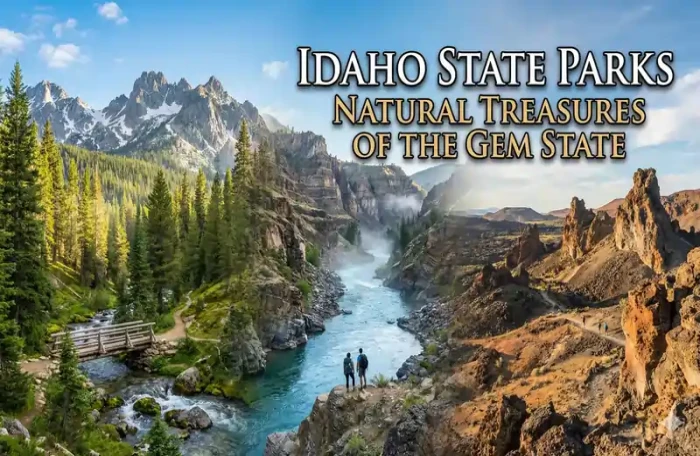




Idaho state parks showcase some of the most diverse landscapes in the American West. Within a single park system, you can hike across towering sand dunes, paddle through spring-fed rivers, fish in alpine lakes, and explore places shaped by pioneers, railroad families, and World War II history.
The Gem State's 30 state parks stretch across deserts, mountains, wetlands, forests, rivers, and lakes. Some are famous for their scenery. Others preserve stories and landscapes that many travelers overlook. Together, they create a collection of destinations that rewards both first-time visitors and longtime Idaho residents.
Whether you're planning a weekend getaway, a camping trip, or a road trip across the state, Idaho's parks offer some of the best outdoor experiences in the Northwest.
Idaho's State Parks by the Numbers
Idaho's state park system is larger and more influential than many visitors realize.
The system includes 30 designated state parks that protect more than 60,000 acres of public land and provide nearly 2,000 developed campsites. Every year, these parks attract more than 7 million visits and contribute roughly $1.2 billion to Idaho's economy.
Those numbers reflect more than recreation. State parks support local businesses, create jobs, and drive tourism in many rural communities. Visitor spending on lodging, restaurants, fuel, outdoor gear, and recreation services helps sustain towns throughout the state.
The variety is just as impressive as the scale. One park may feature massive sand dunes, while another protects wetlands filled with wildlife or granite formations that rise hundreds of feet above the desert floor.
A Park System Built on Conservation
Idaho's state park system began in 1908 with the creation of Heyburn State Park, making it the oldest state park in the Pacific Northwest. Over the decades, Idaho expanded its system to preserve unique landscapes, cultural sites, and outdoor recreation opportunities throughout the state.
Today, the Idaho Department of Parks and Recreation manages parks that protect everything from rare ecosystems and historic landmarks to major recreation destinations. The result is a network of parks that balances public access with long-term resource stewardship.
Many visitors arrive for the scenery. What often surprises them is the history behind these landscapes.

Bruneau Dunes State Park
Bruneau Dunes State Park delivers one of the most unusual landscapes in Idaho.
Located in the state's southwest region, the park is home to a 470-foot sand dune recognized as the tallest single-structured sand dune in North America. The dune rises above the surrounding desert and creates a landscape unlike anything else in the Pacific Northwest.
Hiking remains the most popular activity. Climbing the tallest dune requires effort, but the views from the top stretch across miles of desert terrain.
The park is equally known for its dark skies. An on-site observatory hosts seasonal stargazing programs that allow visitors to view planets, star clusters, and distant galaxies with minimal light pollution.
Camping options include tent sites, RV sites, and cabins, making Bruneau Dunes a popular destination for overnight visitors.
Harriman State Park
Harriman State Park offers some of Idaho's finest wildlife viewing opportunities.
Located near Island Park within the Greater Yellowstone ecosystem, the park protects wetlands, forests, and open meadows that provide habitat for a wide range of species. Visitors frequently spot moose, trumpeter swans, sandhill cranes, elk, and mule deer.
The Henrys Fork of the Snake River flows through the property and is widely regarded as one of the country's premier trout fisheries.
The park's history is just as compelling as its scenery.
Before becoming public land, the property operated as the famous Railroad Ranch. Wealthy railroad families, including the Harrimans and Guggenheims, used the ranch as a private retreat for decades. Roland and Gladys Harriman later embraced a conservation philosophy centered on living in harmony with nature. Their decision to donate the property ultimately preserved one of Idaho's most valuable wildlife habitats.
Today, visitors enjoy hiking, horseback riding, cycling, fly fishing, wildlife photography, and cross-country skiing.
Farragut State Park
Farragut State Park sits along the southern shore of Lake Pend Oreille, Idaho's largest lake.
The park is known for its extensive trail system, campgrounds, boating access, and family-friendly recreation opportunities. More than 40 miles of trails support hiking, mountain biking, and trail running.
Beneath the recreational landscape lies one of Idaho's most significant military stories.
During World War II, this site served as Farragut Naval Training Station. At its peak, the installation housed approximately 55,000 residents, making it the largest city in Idaho at the time. More than 293,000 sailors completed training here during the facility's operation.
Following the war, the base was decommissioned and eventually transformed into a state park.
Visitors can still learn about the site's military history while enjoying boating, swimming, fishing, camping, and hiking.
Heyburn State Park
Heyburn State Park combines beautiful scenery with an important chapter in Idaho history.
The park borders Chatcolet, Benewah, and Hidden lakes, creating excellent opportunities for boating, kayaking, fishing, and birdwatching. Forested shorelines and quiet waterways give the park a peaceful atmosphere that continues to attract visitors more than a century after its creation.
Many of the park's historic structures were built by Civilian Conservation Corps crews between 1934 and 1942. Hundreds of young workers constructed roads, trails, bridges, shelters, and public facilities that continue serving visitors today.
The legacy of the Civilian Conservation Corps remains visible throughout the park and serves as a reminder of one of the nation's most influential conservation programs.
The popular Trail of the Coeur d'Alenes also passes through the park, making it a favorite destination for cyclists.

City of Rocks National Reserve and Castle Rocks State Park
Few landscapes in Idaho are more recognizable than City of Rocks and neighboring Castle Rocks State Park.
Massive granite spires rise above the high desert, creating a playground for climbers and photographers. The formations have attracted outdoor enthusiasts for decades, yet the area offers much more than climbing.
Hiking trails lead to scenic overlooks and hidden rock formations. Wildlife viewing opportunities are common throughout the parks, particularly during the cooler months.
The area also preserves an important chapter of westward expansion. Emigrants traveling the California Trail passed through these valleys during the nineteenth century, leaving names and inscriptions on the rocks that remain visible today.
The combination of geology, recreation, and history makes these parks some of Idaho's most memorable destinations.
Thousand Springs State Park
Water and volcanic activity shaped nearly every part of Thousand Springs State Park.
Located in the Hagerman Valley, the park protects a collection of springs, waterfalls, canyons, and river corridors that showcase southern Idaho's geological history.
One of the most impressive areas is the Malad Gorge Unit. Here, the Malad River cuts through a basalt canyon roughly 250 feet deep before plunging into the feature known as Devil's Washbowl. The surrounding cliffs reveal layers of volcanic activity and erosion that have shaped the landscape over thousands of years.
The park also protects rare native plants, including the cow-pie buckwheat, which grows in only a handful of locations within Idaho.
Visitors interested in geology, photography, and scenic drives often rank Thousand Springs among the state's most underrated parks.
Massacre Rocks State Park
Massacre Rocks State Park tells one of Idaho's most dramatic geological stories.
The landscape was shaped by the prehistoric Bonneville Flood, a massive flooding event that transformed much of the Snake River Plain. When ancient Lake Bonneville breached near the Idaho-Utah border, enormous volumes of water surged across southern Idaho.
The floodwaters rounded and polished the large basalt formations visible throughout the park today. According to Idaho Parks and Recreation resources, the flood briefly carried several times the volume of the modern Amazon River.
The park also preserves sections of the Oregon Trail, allowing visitors to connect geological history with the stories of westward migration.
Lake Walcott State Park
Lake Walcott State Park offers a quieter experience than many of Idaho's larger recreation areas.
Located near Minidoka Dam, the park attracts anglers, birdwatchers, boaters, and campers looking for a more relaxed setting.
The lake supports fishing for species such as trout, bass, and perch. Wetlands and shoreline habitats attract pelicans, herons, waterfowl, and other migratory birds throughout the year.
Shaded picnic areas and lakeside campsites make the park especially appealing for families seeking a peaceful outdoor retreat.
Outdoor Activities Across Idaho State Parks
One of the strengths of Idaho's state park system is its diversity.
Visitors can choose from a wide range of activities depending on the season and location.
Popular activities include:
Hiking
Mountain biking
Road cycling
Horseback riding
Fishing
Boating
Kayaking
Paddleboarding
Swimming
Wildlife photography
Birdwatching
Winter opens another set of opportunities. Parks such as Harriman become popular destinations for cross-country skiing and snowshoeing, while other areas provide access to winter wildlife viewing and quiet backcountry experiences.
Because the parks are spread across several climate zones, outdoor recreation remains available throughout the year.
Camping in Idaho State Parks
Camping is one of the best ways to experience Idaho's parks.
Visitors can choose from a range of accommodations that fit different travel styles and comfort levels.
Many campgrounds offer RV sites with electrical hookups, showers, restrooms, and other modern amenities. Traditional tent campsites remain available throughout the system for travelers seeking a more rustic experience.
Some parks also offer cabins and yurts, providing additional comfort while maintaining access to outdoor recreation.
Popular destinations such as Farragut, Bruneau Dunes, Harriman, and Heyburn can fill quickly during summer weekends and holidays. Reserving campsites in advance is often the best approach during peak travel periods.
Wildlife Viewing Opportunities
Wildlife remains one of the biggest reasons people return to Idaho's parks year after year.
Depending on the location, visitors may encounter:
Moose
Elk
Mule deer
White-tailed deer
Black bears
River otters
Beavers
Foxes
Birdwatchers often spot trumpeter swans, bald eagles, osprey, pelicans, hawks, herons, and numerous migratory species.
Several state parks work alongside nearby Wildlife Management Areas to help protect critical habitat for big game and waterfowl. These partnerships support both conservation and public recreation.
The best wildlife encounters usually happen early in the morning or near sunset when animals are most active.
Visitors should always maintain a safe distance and avoid feeding wildlife.
Planning Your Idaho State Park Adventure
The best time to visit depends on your interests. Spring brings wildflowers, active wildlife, and comfortable hiking temperatures. Summer is ideal for camping, boating, swimming, and extended road trips between parks.
Fall offers cooler weather, colorful foliage, and fewer crowds at many destinations. Winter transforms parks such as Harriman into popular locations for cross-country skiing and snowshoeing.
Regardless of the season, weather conditions can change quickly. Bringing layers, water, snacks, and basic emergency supplies helps ensure a safer and more enjoyable trip.
Travelers planning to visit multiple parks often benefit from having their own vehicle. Many of Idaho's most scenic destinations are located far from major airports and public transportation routes, making road travel the easiest way to explore the state.
Exploring Idaho with Your Own Vehicle
One of the advantages of Idaho's park system is the freedom to build your own itinerary.
You can spend a morning hiking the dunes at Bruneau, explore historic sites at Three Island Crossing, drive north to the forests surrounding Farragut, and finish your trip with a visit to the wetlands and wildlife habitat at Harriman.
Having your own vehicle makes it easier to experience multiple parks at your own pace, especially when traveling between Idaho's diverse regions.
If you're relocating to Idaho or planning an extended stay, AmeriFreight Auto Transport can arrange vehicle transportation so your car is available when you arrive. Our customer service agents help coordinate the transport process, allowing you to focus on planning your trip and exploring everything Idaho's state parks have to offer. Get your quote now!


.webp)