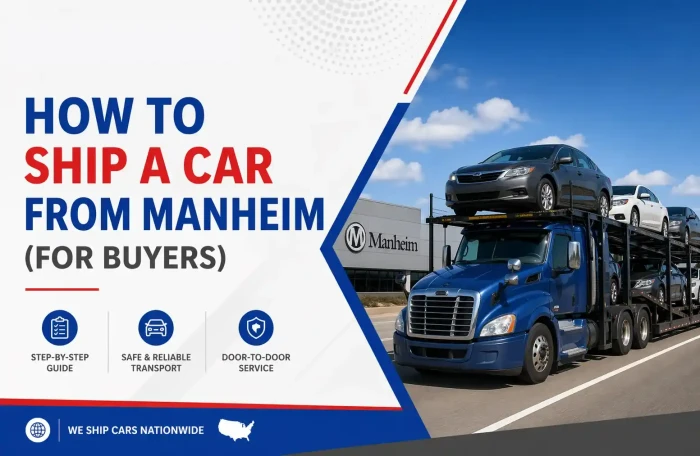



Winning a bid at a Manheim auction is just the beginning of the acquisition process. Once a vehicle is sold, the clock starts on operational costs. For dealerships, maintaining margins depends on how quickly inventory can be moved; every day a car remains at the auction facility, it incurs storage fees and delays potential retail revenue.
To successfully transport a vehicle from Manheim to your dealership, you must efficiently manage financial clearances, gate protocols, and federal shipping regulations.
Choose Your Manheim Auto Transport Modality
Select your transport marketplace before you start bidding. Manheim integrates two distinct channels into their digital checkout. Ready Logistics operates as a full-service managed provider. You pay a premium for this turnkey solution because the platform handles carrier vetting and dispatching directly from the Cox Automotive ecosystem.
Alternatively, Central Dispatch functions as a self-managed subscription marketplace. You list your dealer auto transport needs and wait for carriers to bid on the route. This path requires significant administrative effort since you must verify carrier insurance limits and manage the documentation yourself. It does offer the potential for lower per-unit shipping costs, especially if your dealership buys heavily along high-traffic freight lanes.
Synchronize Payment for Immediate Release
Coordinate your payment timing to ensure the immediate release of the vehicle. A unit must be officially marked as "Released" in the auction system before a carrier can pick it up. Dealers using a NextGear Capital floor plan have a significant advantage in this regard, as transport costs can be integrated into the line of credit during digital checkout. This action triggers an instant payment status. However, it is important to note that transportation costs must be floor planned at the time of purchase, as the system typically does not allow for retroactive financing of logistics fees after the transaction is finalized.
Other payment methods create dangerous lag times. Transactions conducted through digital channels such as Simulcast or OVE often have a hard deadline for payment, typically by 4:00 PM on the day of purchase, to avoid late fees and release delays. A wire transfer usually takes 12 to 24 hours for the auction to verify, and automated clearing house payments can take three to five business days to clear. A delayed payment almost guarantees you will incur daily storage fees. It is also the primary cause of dry runs. A dispatched driver will be turned away at the gate if the vehicle still shows a pending payment status.
Secure the Gate Pass for Auction Car Shipping
Download the Gate Pass immediately. While many first-time buyers believe a physical vehicle title is necessary immediately, the industry standard for domestic shipping relies solely on the Gate Pass and the Bill of Sale. The auction processes the title separately.
However, buyers must be aware that vehicles sold as "Title Absent" transactions cannot be removed from the auction lot until the title is physically received by the auction unless specific local exceptions apply. Once cleared, a carrier only needs a valid Gate Pass to legally remove the vehicle from the premises. The information on that electronic or physical document must match the carrier's credentials exactly. A mismatched buyer number or an incorrect carrier company name will result in a hard denial at the security gate.
Beat the Auction Storage Fee Window
Speed is essential when moving inventory. Manheim facilities prioritize high turnover to manage lot space, meaning their free storage windows are often shorter than those at other auctions. Most locations require vehicle removal within 24 to 48 hours of purchase. Missing this deadline results in daily storage fees that quickly diminish your profit margins. Rules vary by location: Manheim Minneapolis provides seven calendar days of free storage, while Manheim San Antonio allows 30 days but applies a heavy $100 weekly fee once that period ends. Additionally, many auctions may tow vehicles at the buyer's expense if they are left for more than 48 hours.
You must schedule transport immediately after the sale and verify the specific gate hours for the local auction. Manheim Pensacola allows pickups until 10:00 PM, but locations like Manheim Fort Myers lock their gates much earlier. Sending a truck outside of operating hours guarantees a delay and likely an extra fee from the driver.
Disclose the Mechanical State of Wholesale Vehicles
Detail the exact mechanical condition and equipment needs of your purchase. A large volume of wholesale auction vehicles are inoperable. If a car will not start or has locked wheels, it requires a carrier equipped with a winch or a specialized flatbed with a tilt-deck. You must disclose this condition when booking.
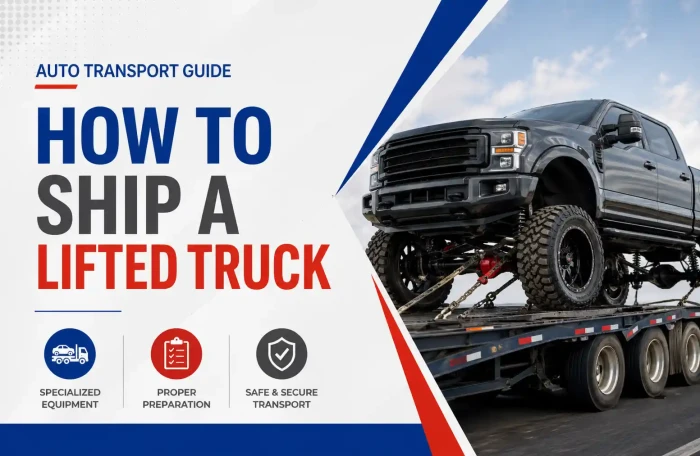
You also need to account for vehicle dimensions. Lifted trucks or dual-rear-wheel pickups take up more physical space and weight capacity. This automatically triggers oversized transport fees of roughly 200 dollars and severely limits which carriers can accept the load. Open-air multi-car carriers handle roughly 90 percent of domestic wholesale freight, while enclosed transport is generally mandated for luxury exotics or any vehicle with a retail value exceeding 90,000 dollars.
Navigate Dealer Auto Transport Compliance
Factor in weight limits and compliance tracking. Interstate vehicle transport is governed by federal regulations that dictate carrier availability and transit speeds. As of January 2025, the Federal Motor Carrier Safety Administration modernized its system to eliminate Motor Carrier numbers, making the USDOT number the sole identifier for carriers to enhance security and prevent double-brokering.
Car haulers must adhere to strict weight limits. This is important to remember when buying electric vehicles because EVs are significantly heavier than their internal combustion counterparts. Carriers must carefully plan their load engineering to avoid exceeding axle weight limits. Overhang safety is also tightly regulated. Federal law permits car haulers to overhang cargo by 3 feet in the front and 4 feet in the rear. Any rear overhang exceeding 4 feet must be marked with a 12-inch square red flag during the day and a red light at night.
Drivers are restricted by safety rules tracked through electronic logging devices. A critical 2025 update eliminated the exemption for pre-2000 engines, meaning all commercial vehicles in interstate commerce must now utilize a compliant logging device. A cross-country transit covering more than 2,000 miles will take five to nine business days, a timeframe strictly resulting from drivers taking mandatory off-duty periods.
Consider state-specific financial and environmental regulations as well. Certain states like California enforce strict anti-idling restrictions that limit how long a car hauler can run its engine while stationary. Bringing a vehicle into California also triggers strict use tax enforcement. Texas applies a Standard Presumptive Value calculation to ensure the state collects a 6.25 percent tax on a realistic market valuation regardless of what you paid at auction. Florida imposes a 6 percent state tax plus potential local county surcharges that can push the total to 8 percent, alongside a weight-based registration fee.
Execute a Rigorous Drop-Off Inspection
The final transfer of liability happens the moment the vehicle comes off the trailer. Transport pricing assumes standard carrier liability, but this coverage generally excludes weather events and minor road debris damage like windshield chips. The Bill of Lading serves as your primary evidentiary document. Your receiving manager must inspect the vehicle immediately against the condition report generated at the auction lot.
Manheim recommends taking a full photographic set at the time of delivery that captures all four corners, the roof, the underbody, specific impact zones, and the odometer reading to verify mileage against the auction disclosure. If a vehicle arrives with new damage, you must document the issues on the delivery Bill of Lading and take photographs before the driver leaves the lot.
The logistical phase of the purchase is where projected profits are secured. Experienced buyers view transport as a core component of their bidding logic rather than an afterthought. By mastering the checkout process, verifying gate passes, and conducting thorough drop-off inspections, you can minimize transit time and avoid unnecessary administrative fees.
Move Your Inventory
When you are ready to move your purchases off the auction lot, AmeriFreight Auto Transport can arrange Door-to-Door Service (Location Permitting) directly to your dealership. As one of the best reviewed in the industry, our customer service agents work with buyers to secure reliable capacity across domestic lanes. There is no upfront payment until you choose a carrier.
Get Your Instant Shipping Quote with AmeriFreight.