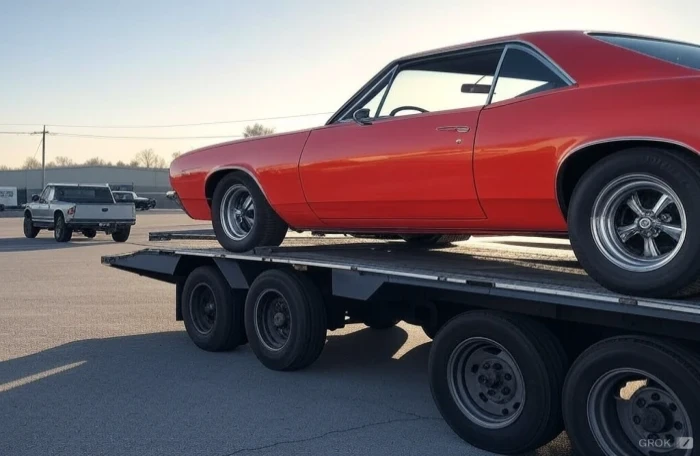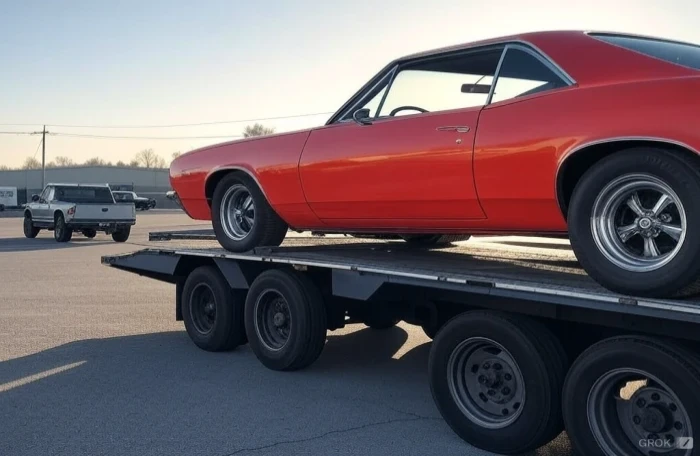



In auto transport, top load means a vehicle is placed on the upper deck of a multi-level open car carrier. Most open carriers have two levels. Vehicles on the upper level ride above the rest of the shipment instead of beneath other cars.
Shippers usually request top load for low-clearance vehicles, convertibles, antiques, collector cars, and other high-value automobiles. The purpose is to reduce certain types of exposure during open transport.
The term is industry language. It does not appear in federal regulations. What federal law governs is how vehicles are secured, how loads are balanced, and how carriers maintain insurance and operating authority.
Why Trailer Position Matters
On an open carrier, vehicles share space closely. Lower-deck placement positions a vehicle nearer trailer tires and directly beneath other cars. That increases exposure to:
Road spray
Gravel and debris kicked up from traffic
Residual drips from vehicles positioned above
Upper-deck placement adds separation from those specific exposures. It does not shield a vehicle from weather. Open transport means rain, dust, and temperature shifts still apply.
There is also a tradeoff. Placing weight on the upper deck raises the trailer’s center of gravity. The FMCSA Cargo Securement Rules note that vehicles with higher centers of gravity may roll over at lateral accelerations above approximately 0.35 g.
That matters to carriers when distributing weight. Upper placement can improve debris separation, but it requires careful balancing to maintain stability.

Equipment and Loading Standards
Top loading depends on specialized equipment. Multi-level car haulers use hydraulic decks and adjustable ramps designed to raise and lower upper platforms.
The Auto Haulers Association of America (AHAA) Loading Manual outlines accepted loading practices used across the industry. Key operational standards include:
A recommended maximum ramp angle of 7 degrees to reduce underbody damage during loading
Approximately 3–4 inches between bumpers
Around 5 inches between a vehicle roof and the upper deck
Measuring overall trailer height with a height stick before departure
All of those practices are detailed in the AHAA manual. Height also matters. Most states limit vehicle height to approximately 13 feet 6 inches. Raising a vehicle to the upper deck increases total trailer height. Route planning must account for bridge clearances and state-specific limits.
Federal Cargo Securement Requirements
Vehicle placement does not change federal securement obligations.
Under 49 CFR § 393.128, automobiles must be secured at the front and rear to prevent movement in all directions. These regulations require a minimum of two tiedowns per vehicle. Industry best practice often uses four tiedowns per vehicle, consistent with the AHAA manual’s guidance.
Securement rules apply equally to upper and lower deck vehicles. Top load does not alter regulatory requirements
Weight, Height, and Load Distribution Constraints
Top load is not always available and upper decks have weight limitations. Heavier vehicles such as full-size trucks or large SUVs are often positioned on the lower deck to maintain axle balance and stay within federal and state weight limits.
Height is another constraint. A tall SUV placed on the upper deck may push the trailer beyond legal clearance limits. In those cases, lower placement is required regardless of preference.
Load distribution is critical. Carriers must balance vehicles across the trailer to prevent uneven axle loading. Even if a shipper requests top load, equipment configuration and weight distribution ultimately determine placement.
Cost Considerations
Top load usually carries an additional fee on open transport. The reason is structural. There are fewer upper-deck positions available per trailer.
Pricing varies by:
Route
Seasonal demand
Equipment availability
Vehicle size
Top load generally costs more than standard lower-deck placement and less than enclosed transport. Enclosed transport provides full shielding from weather and road debris. Top load provides partial exposure reduction within an open system.
When Top Load Makes Practical Sense
Top load is typically appropriate when a vehicle is:
Low to the ground
A convertible or soft-top
A collector or classic vehicle
Sensitive to cosmetic debris exposure
It is less critical for standard daily-driver vehicles with normal ground clearance.
Top load reduces certain risks associated with open transport. It does not eliminate transport risk, change securement laws, or replace enclosed shipping when maximum protection is required.
Potential Exposures for a Top-Loaded Vehicle (Open Auto Transport)
Ready to Ship Your Car the Smart Way?
AmeriFreight Auto Transport offers trusted nationwide car shipping with experienced carriers and dedicated customer service agents. Get a free quote today and see if top load placement or enclosed transport is the right option for your vehicle.